AI · Privacy · Research
What Comes After Zettabytes?
The last secret in a world that remembers everything. On data, inference and who controls what can be known about us.
For most of history, the fear was forgetting. Libraries burned. Archives rotted. People died, and the stories they carried died with them. We spent centuries fighting that loss, and to win we invented writing, the printing press, photography, magnetic tape, the computer and the internet.
We won. Today almost anything can be recorded and kept.
In my last essay I wrote that manuscripts don't burn. This one starts from the other side of that sentence. What if the problem of the future is not that we forget, but that we can no longer forget?
01. The building with no windows
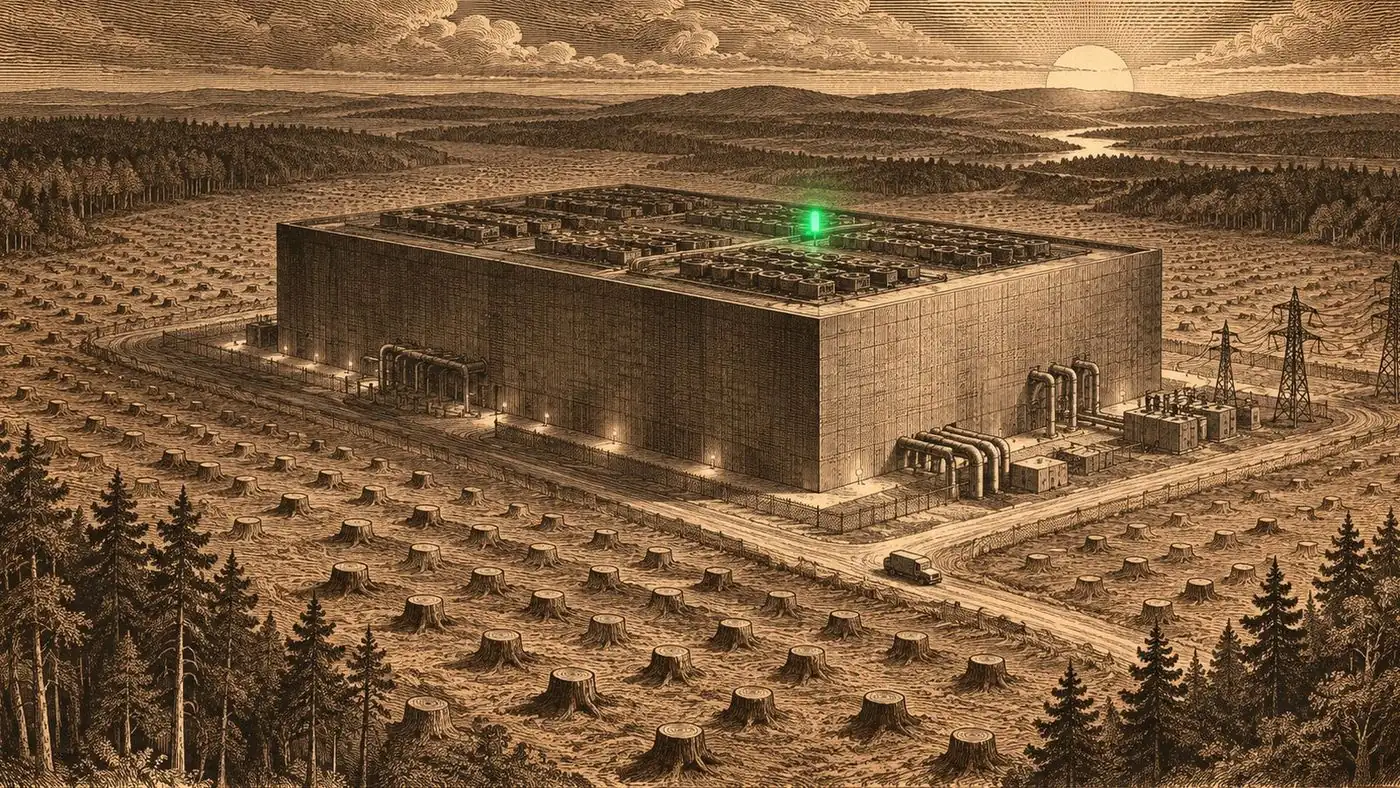
Somewhere on the edge of a city, land is being cleared for another data centre. Roads go in, then power lines, then cooling. Then a building the size of several football fields appears, with no windows and no visitors, full of machines that never sleep.
Inside sit photos, messages, contracts, films, payments and corporate archives. And copies: backups of backups, old versions of files, system logs, temporary data nobody got round to deleting. Somewhere among them is a part of your life you have probably forgotten yourself.
The numbers have outgrown us. Humanity was expected to create about 175 zettabytes of data in 2025. A single zettabyte would hold nearly five billion copies of GTA VI, a game that reportedly takes 210 GB on its own.9
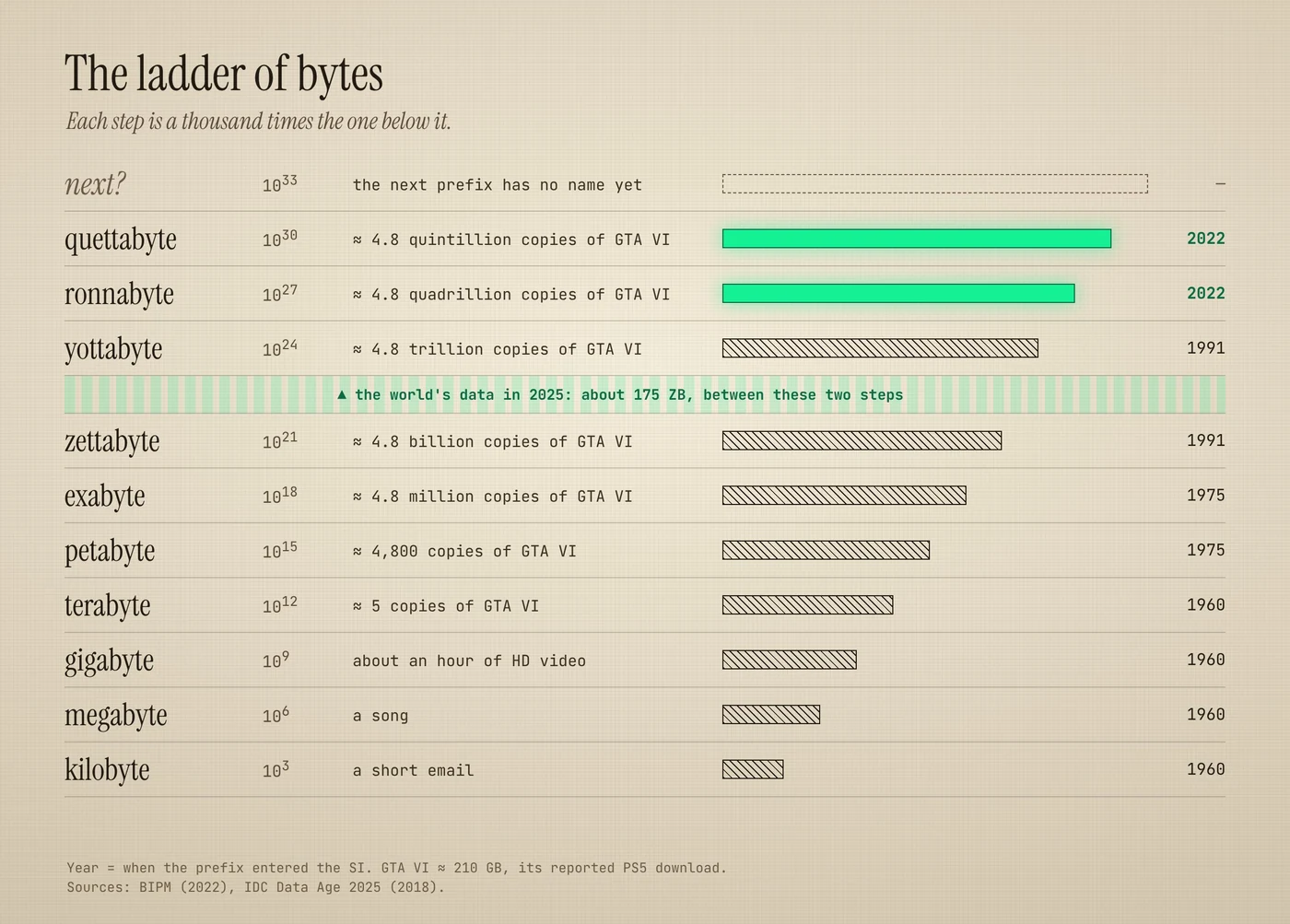
In November 2022 the world's measurement authorities added two new prefixes, ronna and quetta, for 10²⁷ and 10³⁰. It was the first expansion of the list since 1991.1 The prefixes measure everything from mass to distance, but the flood of data was one of the main reasons given for needing them.
The cloud has weight, too, and it gets heavier as the planet warms. 2024 was the hottest year on record and the first calendar year more than 1.5°C above pre-industrial levels, and the three hottest years ever measured are the last three. The Economist's outlook for 2027 sums it up in four words: hottest year ever, again. Meanwhile data centres used about 415 TWh of electricity in 2024, roughly 1.5% of the world's total, and that figure is expected to more than double by 2030. Every stored byte ends up as heat, and up to a third of a data centre's electricity can go on cooling it away.2 We are building machines that must be kept cold to remember, on a planet running a fever.
The cloud is not a cloud. It's someone else's computer, standing on someone's land.
But the most interesting question about that building is not how much it holds. It is what can be learned from what it holds.
02. The parking lot
Sam Walton, who built Walmart, is said to have counted the cars in his stores' parking lots to see how business was going.3 It was an old shopkeeper's habit. In 2011 it went to space. A company called RS Metrics began counting cars outside retailers from satellite images and selling the counts, mostly to hedge funds.4
It worked. Researchers at Berkeley later showed that the counts let traders anticipate earnings before they were announced, and that the gains came at the expense of individual investors, who had no such pictures and tended to sit on the other side of the trade.4
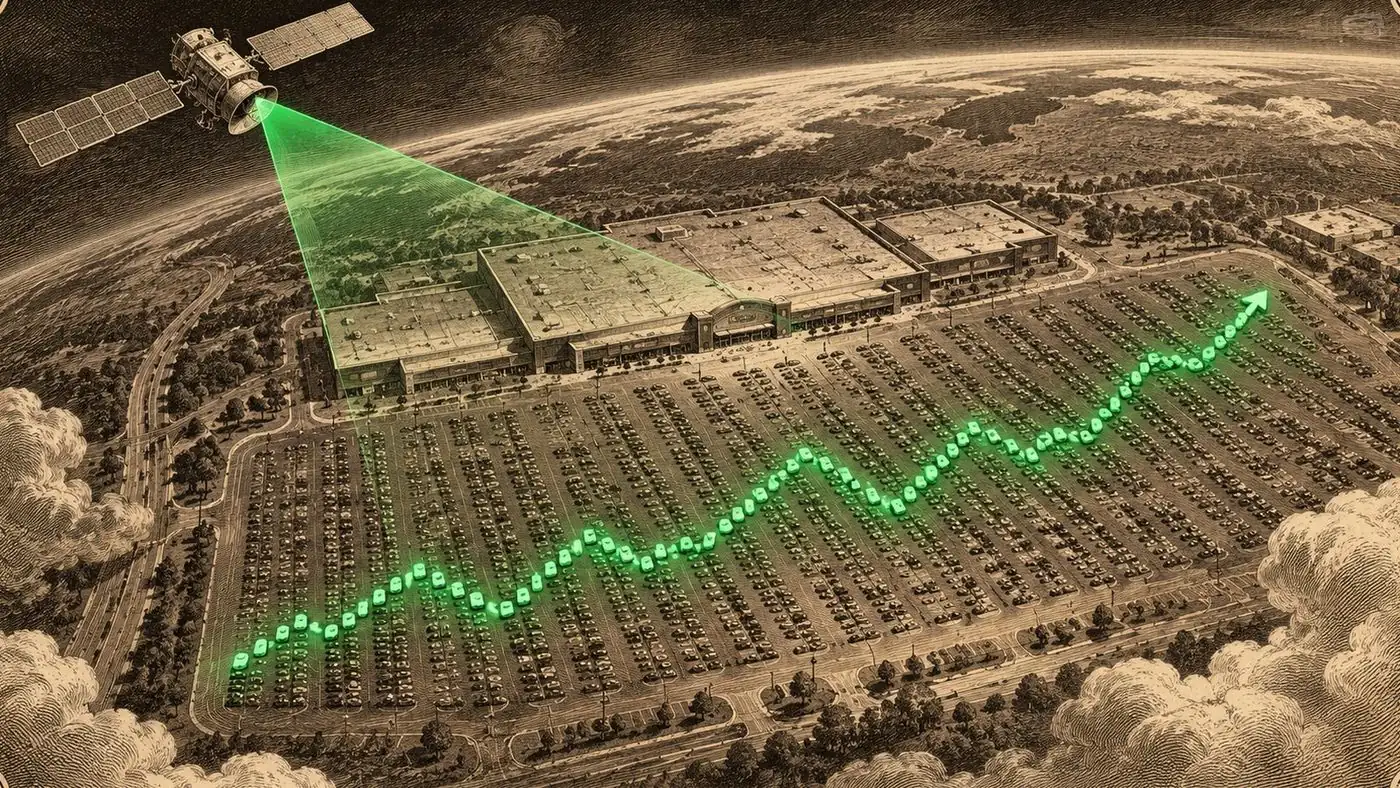
Nobody built a parking lot to report quarterly sales. The information was there anyway. It only had to be read.
That is the quiet rule of the digital age: information exists even where nobody meant to share it. Night lights say something about an economy. Ship traffic says something about trade. And one person's trips say something about their life.
03. You only told the app an address
In 2012 Uber's data team published a blog post called "Rides of Glory". They took rides between 10 p.m. and 4 a.m. on Friday and Saturday nights, matched them with a ride back from near the same spot a few hours later, and mapped where, by the company's own guess, one-night stands were most common. Boston came first.5 The riders had told the app two addresses. The app guessed the rest. It proved nothing about any single rider, and it did not need to. The post was later deleted.
Six years later the fitness app Strava published a global heat map of its users' runs and rides. In January 2018 an analyst noticed that in remote deserts and war zones the map lit up the outlines of military bases and the routes soldiers ran around them. Nobody had leaked anything. People had simply gone jogging with their watches on. Analysts called what the map revealed a "pattern of life".6
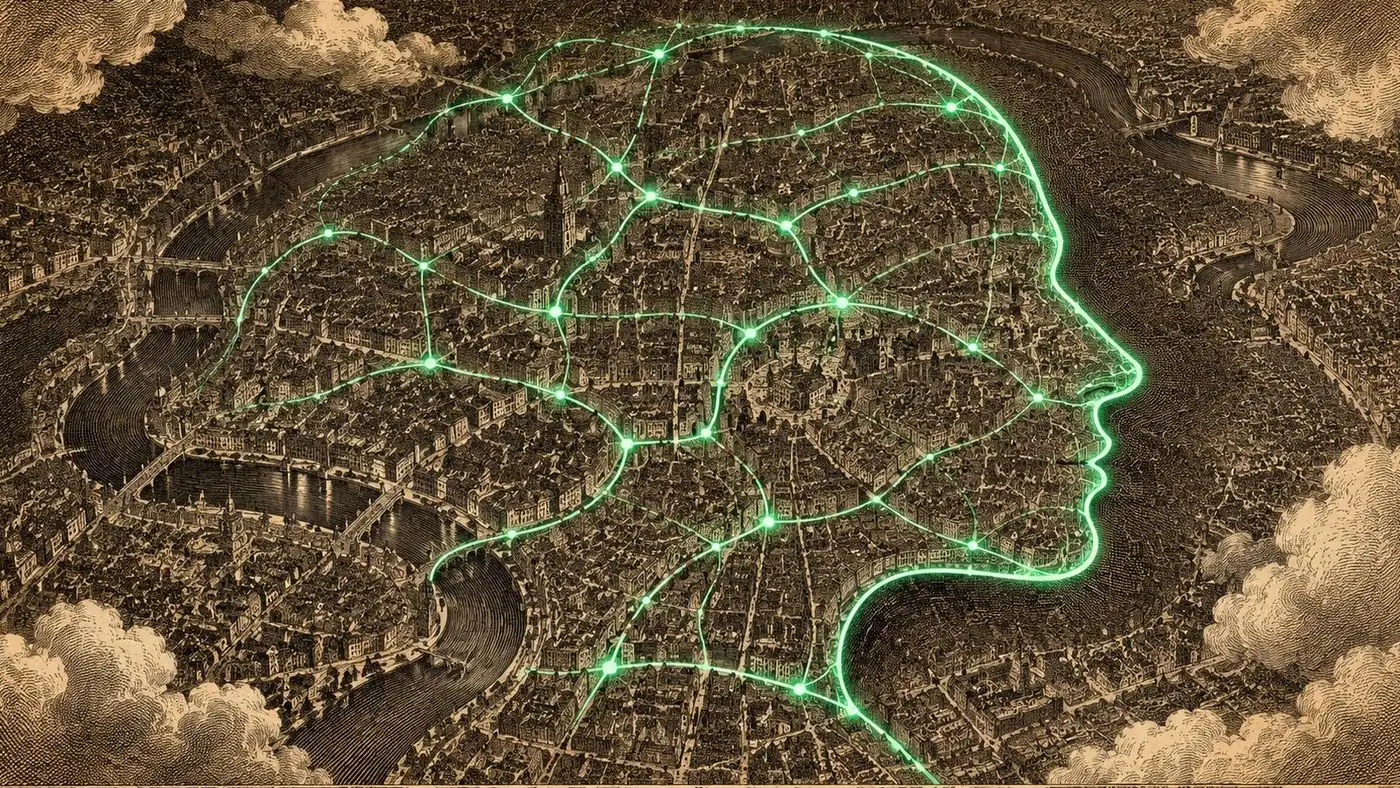
One trip means nothing. A thousand trips describe a person: where they work, when they sleep, whom they visit, when something in their life changes. None of this proves anything about a single individual. But it can be accurate enough for someone to act on.
You don't have to tell a company who you are. Your patterns might do it for you.
04. Big Brother doesn't need to watch
In Orwell's 1984, surveillance needed a watcher: a face, a screen, someone on the other side. Today it needs only infrastructure that records events and a model that finds patterns in them.
The pieces live in different places. The ride app knows routes. The bank knows payments. The social network knows connections. The search engine knows what you wonder about. The phone network knows where the device has been. Work tools know what you are building and with whom. No single company has to hold all of it. But when the pieces meet, through partnerships, data brokers or leaks, a new kind of knowledge appears.
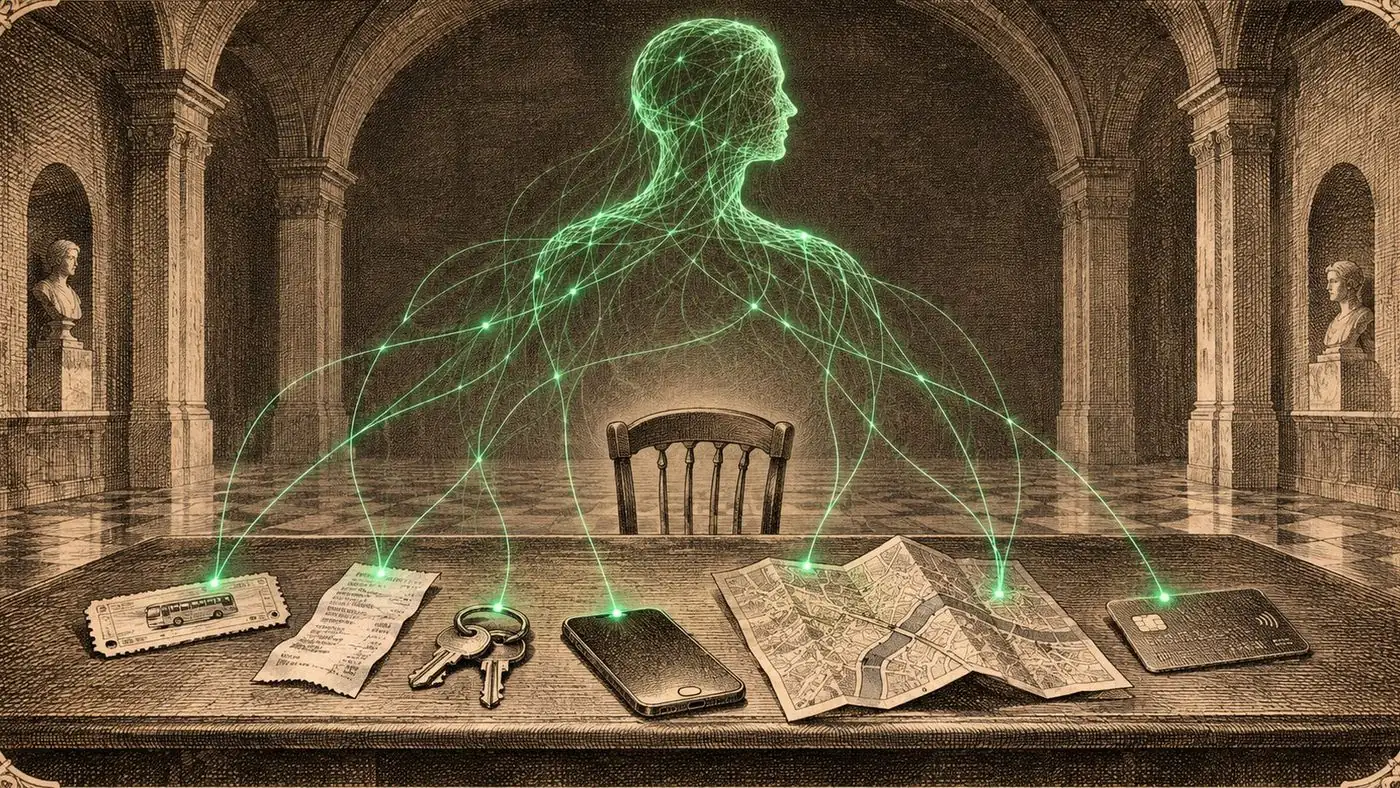
Then add AI, which can read millions of records, find correlations nobody looked for and turn them into probabilities. Even when its conclusions are wrong, the consequences for a person can be real: a loan, a visa, a job, a price.
Big Brother doesn't need to watch anymore. He can just ask the model.
05. The age of inference
For most of history, a secret was lost when it leaked. Someone talked, a letter was opened, a file was left on a train. The defence was simple: first don't tell, then encrypt, then control who has access.
All three assume that a secret has to travel to be lost. Inference breaks that assumption. A secret can now be rebuilt from things that were never secret at all: a parking lot, a jogging route, a ride home at 3 a.m. Nothing leaks. The conclusion is simply computed.
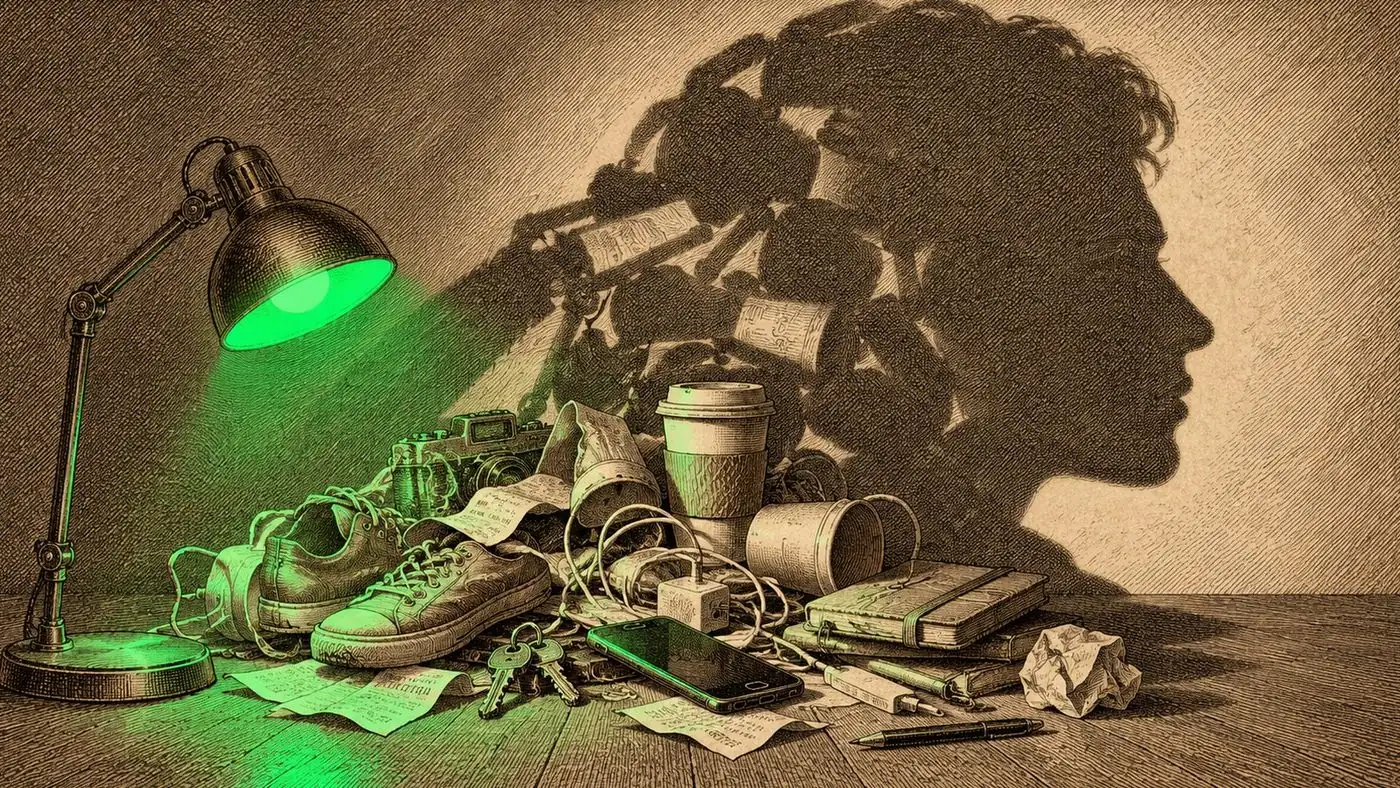
Today's AI already does a version of this, but it works with the data it is given and the questions it is asked. The systems being built now aim further. A system that can find its own sources, form a hypothesis and test it against the world does not wait for the right question. Whether or not we end up calling it AGI, its power may lie less in knowing everything than in discovering what nobody told it.
That does not make it all-knowing. Inference produces probabilities, not facts, and probabilities are often wrong. But a guess does not have to be certain to be used. It only has to be good enough for someone to act on.
Privacy in the age of AI is not only about what you reveal. It's about what can be inferred.
06. Your second brain, someone else's memory?
At the same time, we hand over our memory willingly. We keep notes, plans, documents, conversations and photos in digital systems and call the result a second brain. The idea is beautiful: free the mind from having to remember everything, and let a machine store, search and remind.
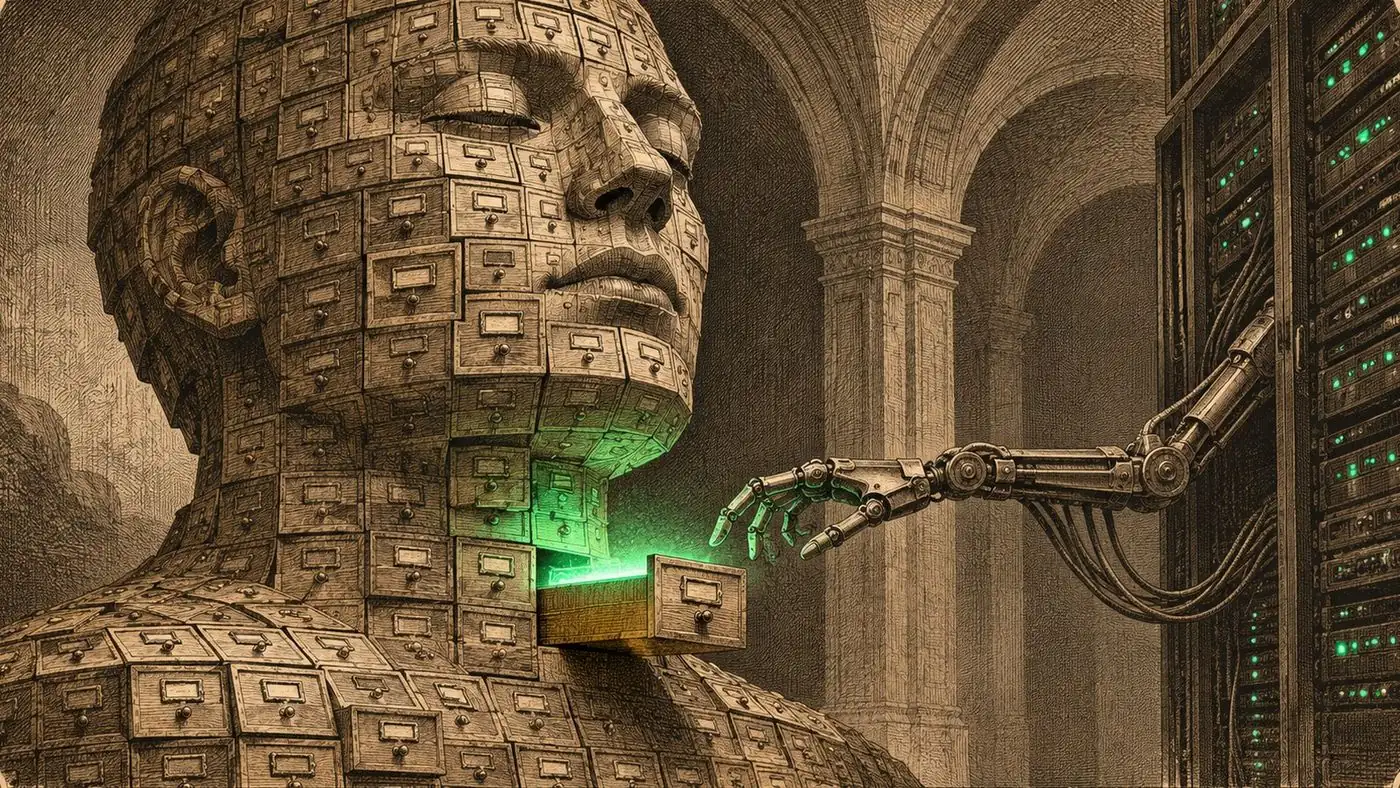
I live this way. My projects, people, plans and drafts sit in one vault, and AI agents read it every day to help me work. It makes me faster. It also means there is now a more complete picture of my life than the one in my own head.
Imagine ten years of such a vault. It knows your career, your money, your mistakes, the offers you turned down, the projects you never started, the thoughts you never published. Now give it a model strong enough to read all of it at once. It might see patterns you never noticed, predict your decisions, find your weak spots and suggest where to go next. Or, in a less kind scenario, use all of that in the interest of whoever controls the system.
For years we trusted platforms to store our information. Now we are starting to trust AI to interpret it and to act on our behalf. That is a much deeper level of access. We built a second brain to be freer. The question is whose hands it ends up in.
07. The last secret
In The Dark Forest, the second book of Liu Cixin's Three-Body trilogy, an enemy civilisation can watch almost everything humans do, but it cannot read their minds. So humanity launches the Wallfacer Project. A few people are trusted to build strategies that exist only in their heads. They can command resources and move people, and the enemy can watch every move. What it cannot see is the purpose behind the moves, because that purpose was never spoken or written down.7
It is fiction, but it reads differently today. Every year we move more of our thinking into digital space. We write ideas into notes, talk through doubts with AI, keep plans in shared documents. The more convenient this external memory becomes, the more we tell it.
And the next machines may not even need to be told. Given enough context, a model does not have to know your secret. It only has to guess it.
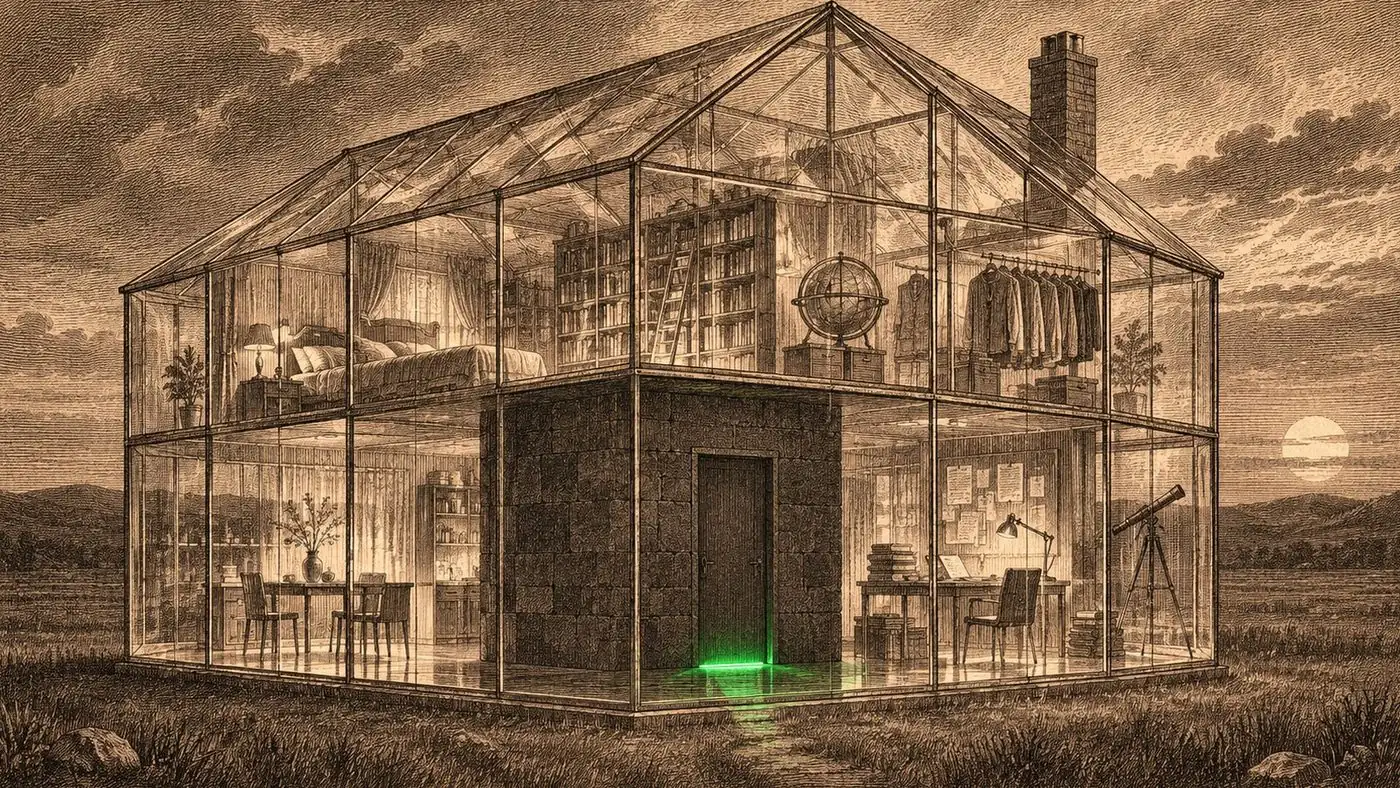
Perhaps the real luxury of the future is not access to all the world's information. It is a place where nobody but you knows what you are thinking.
What if the last private place is the human mind?
08. Proof without disclosure
Most of the internet runs on one rule: to prove something about yourself, hand over the information. To prove your age, show a document. To prove you can pay, show your balance. To pass a check, send your passport, your face and your address.
But does a service really need all of that? If it only needs to know you are over 18, why show your date of birth? If it only needs to know you have enough money, why show the whole balance?
Cryptography has had an answer since 1985: zero-knowledge proofs.8 A zero-knowledge proof lets you show that a statement is true without revealing the secret behind it. In a suitable system you can prove you are over a certain age without giving your birthday, or prove a computation was done correctly without exposing its inputs.
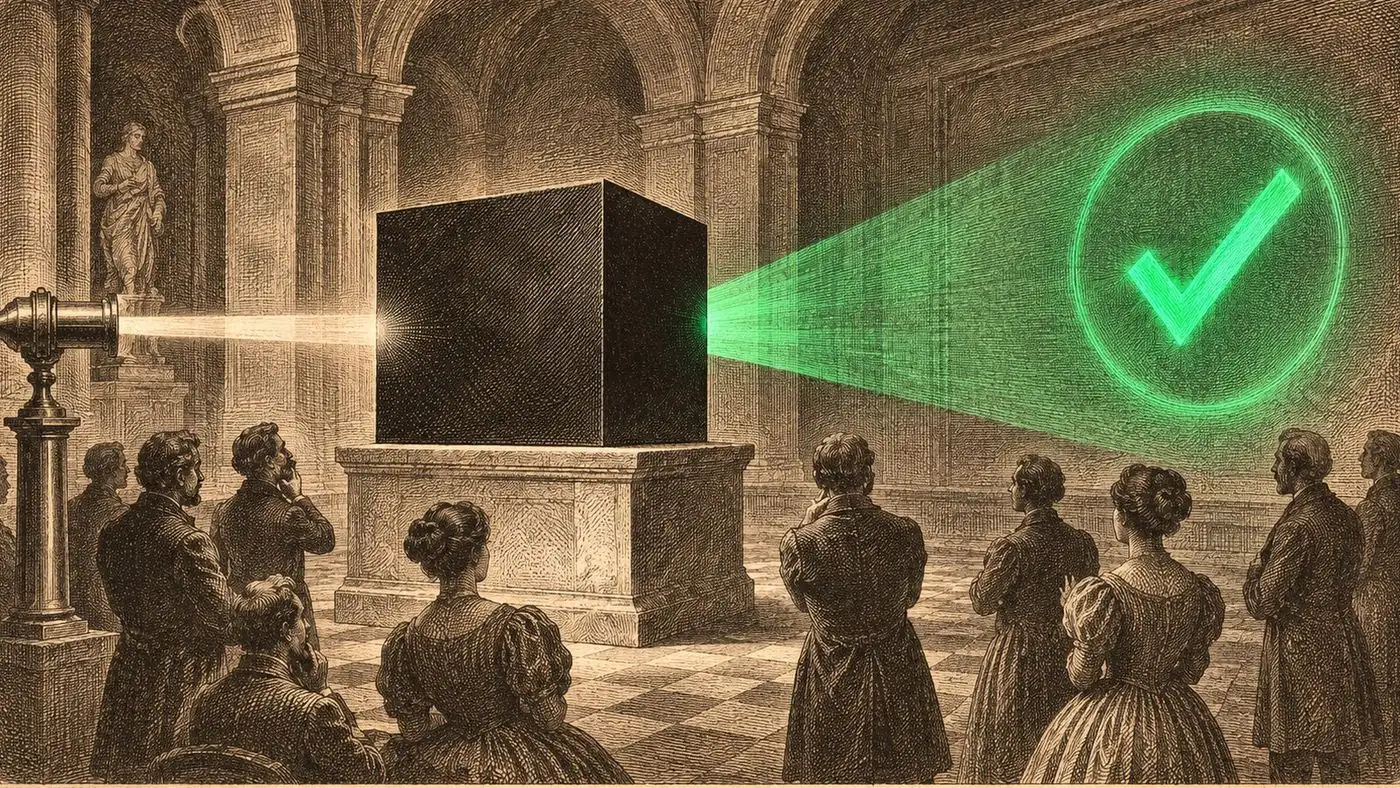
It is not an invisibility cloak. ZK does not stop an app from collecting data, does not hide your IP address or location, and does not make the rest of a system private. But it changes the basic assumption. Trust does not always require disclosure.
That opens the door to a different internet: from showing your identity to proving a right, from handing over a whole document to checking one condition, from blind trust to verification. The next breakthrough may be not in storing more, but in needing to reveal less.
09. Ownership is the ability to say no
Visibility is a currency now. We post, share our wins and build personal brands, and being seen brings opportunities. It also has a price. A post from ten years ago can be read today with tools that did not exist when you wrote it. Old data gains new meaning, and what looks harmless today may be sensitive tomorrow.
Privacy was never only about hiding. You close the door of your home not because you are doing something wrong, but because context matters. Privacy is the ability to set your own boundaries: who sees what, for what purpose, for how long, and whether you can take it back. It includes the right to be visible and the right to stay unknown.
So ownership in the digital world has to mean more than a title. Can you take your data with you? Delete it? Refuse processing a service does not need? Move to another platform and keep your history? Use AI without giving it your whole life? Prove a fact without revealing everything else?
And yet ownership has a limit we rarely admit. You can own your files. You cannot own other people's observations of you. You can delete your ride history, but not the satellite photo of the parking lot where your car stood, and you cannot always stop someone from drawing a conclusion from public data. Ownership is necessary. It is not enough. The next layer of privacy is about what never gets collected, and what can be proved without being shown.
None of this means giving up the cloud, AI or convenient services. It means having a choice: local or remote, disclosure or proof, a platform or an open protocol, share or keep.
Privacy gives us boundaries. Ownership gives us control.
10. What comes after zettabytes?
Yottabytes. Then ronnabytes. Then quettabytes. We will invent new names and build new data centres, record more events, keep more memories and build better systems to analyse them.
But maybe we are asking the wrong question. We keep asking how much humanity can store. We should be asking how much really needs to be stored, who owns it, who has the right to analyse it, and whether a person can live in a digital society without every part of their life becoming a dataset for someone else's system.
There is a paradox in the building with no windows. In the hottest years ever measured, we clear land and pour electricity into keeping more data, and at the same time we invent cryptography to reveal less of it. Perhaps the most efficient privacy system is the one that never collects what it does not need. The cheapest byte to protect, and to power, is the one that was never stored.
We are entering an age in which the ability to forget may be an advantage, not a flaw, and in which freedom is measured not by how much information we can reach, but by how much information about us we control.
We spent centuries building machines that could remember what humans forget. Now we are building machines that can discover what humans never knew. What happens when they start discovering things about us that we never meant anyone to know?
The future is not about knowing everything. It's about choosing what remains unknown.
YD
Amsterdam, November 2026
- Network World: IDC expects 175 zettabytes of data worldwide by 2025, 2018; Complex: Grand Theft Auto VI will reportedly be a 210 GB download, 2026↩
- BIPM: New prefixes for the SI adopted by the CGPM, 2022; NPR: The world generates so much data that new unit measurements were created to keep up, 2022↩
- Copernicus: 2024 is the first year to exceed 1.5°C above pre-industrial level; WMO via Insurance Journal: 2025 among the three hottest years on record, 2026; IEA: Energy and AI, Executive summary and Energy demand from AI, 2025↩
- Katona, Painter, Patatoukas, Zeng: On the Capital Market Consequences of Big Data, Journal of Financial and Quantitative Analysis↩
- Berkeley Haas: How hedge funds use satellite images to beat Wall Street and Main Street, 2019↩
- Marketplace: Uber's data makes a creepy point about the company, 2014; CBS San Francisco↩
- NPR: Pentagon reviews GPS policies after soldiers' Strava tracks are exposed, 2018; Help Net Security: Strava heatmap reveals patterns of life, 2018↩
- Liu Cixin, The Dark Forest, 2008.↩
- Goldwasser, Micali, Rackoff, The Knowledge Complexity of Interactive Proof Systems, STOC 1985.↩
Series · AI, memory and power
- 01The Babylon Tower of Artificial Intelligence
- 02Manuscripts Don't Burn
- 03What Comes After Zettabytes? you are here
This is the latest part. The next one goes to subscribers first.
Get the next essay
One email when a new Y-DAO Research essay is out. No spam, unsubscribe any time.
Discuss this essay
The conversation lives in the Y-DAO Hub. Sign in with a Solana wallet or an email link.
Join the discussion →Support independent research
No paywall, no ads. If this essay was worth something to you, send a tip in SOL or USDC on Solana.